On These Grounds, a Legacy Endures
IF President & CEO Ahmed Young reflects on the moment that shaped Indianapolis, and the choices that still shape us today.
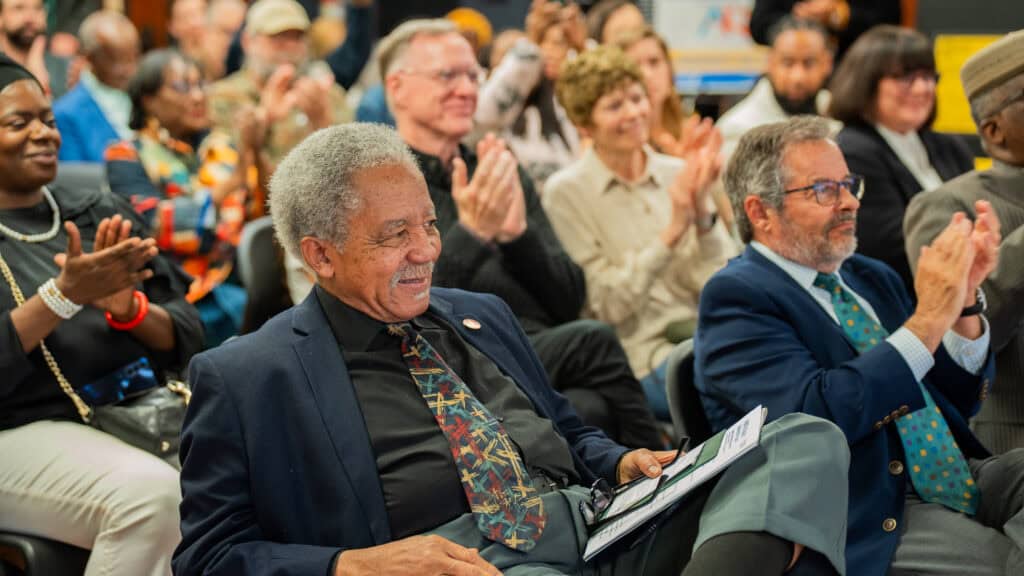
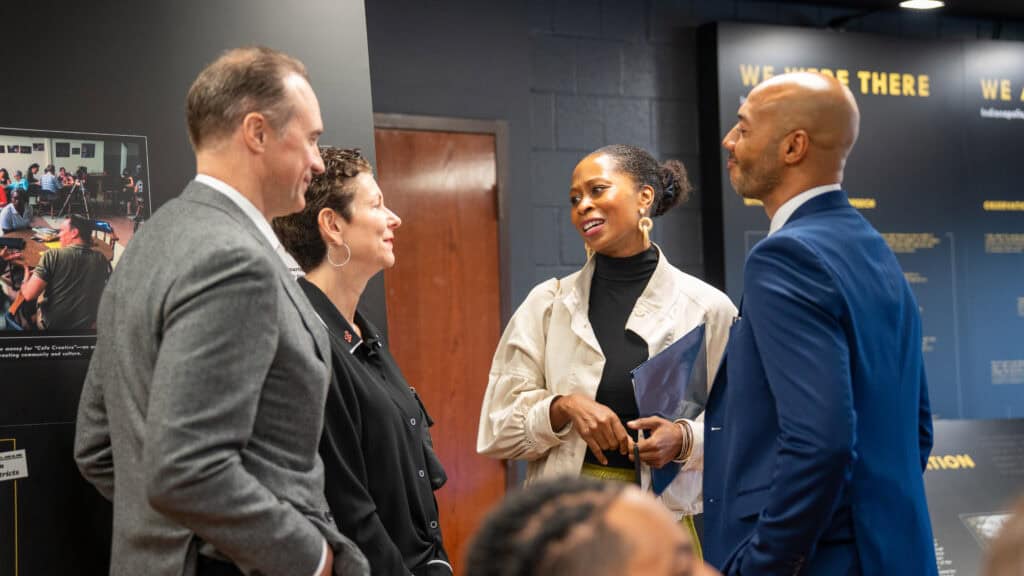
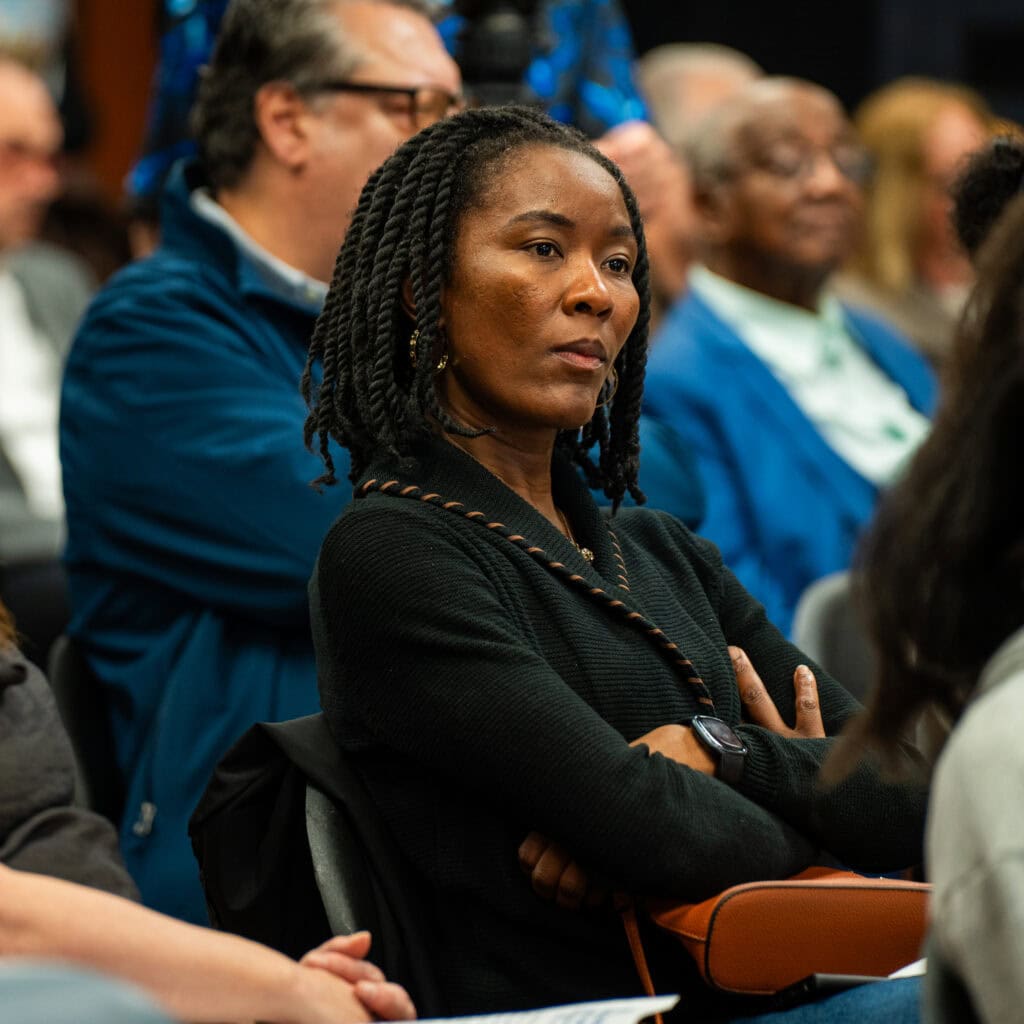
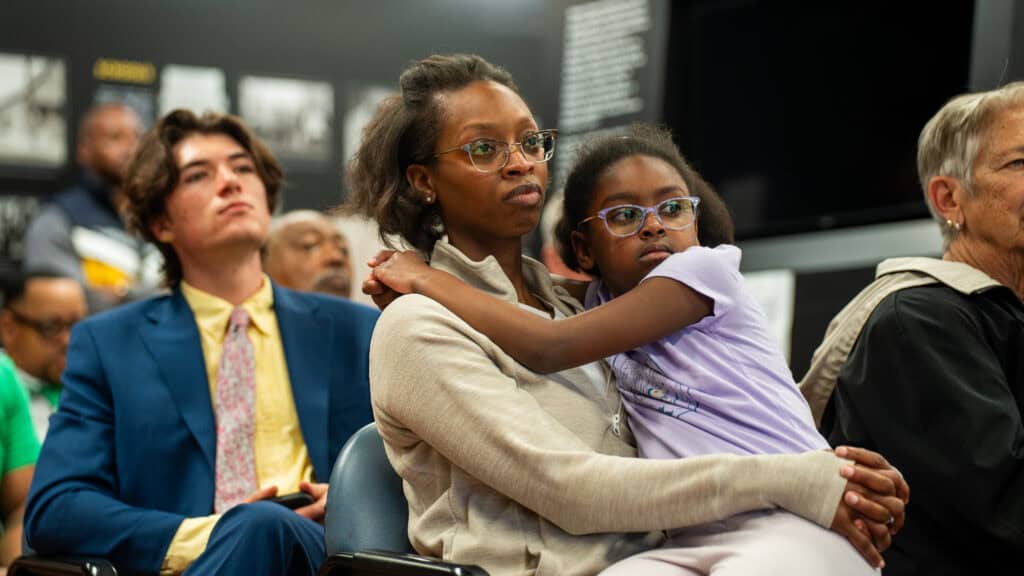
Community members recently gathered at Dr. Martin Luther King Jr. Park for the Kennedy King Memorial Institute’s 58th Commemorative Ceremony. The theme, Still We Reach: Building the Legacy, invited reflection on a defining moment in the city’s history and a renewed commitment to what comes next.
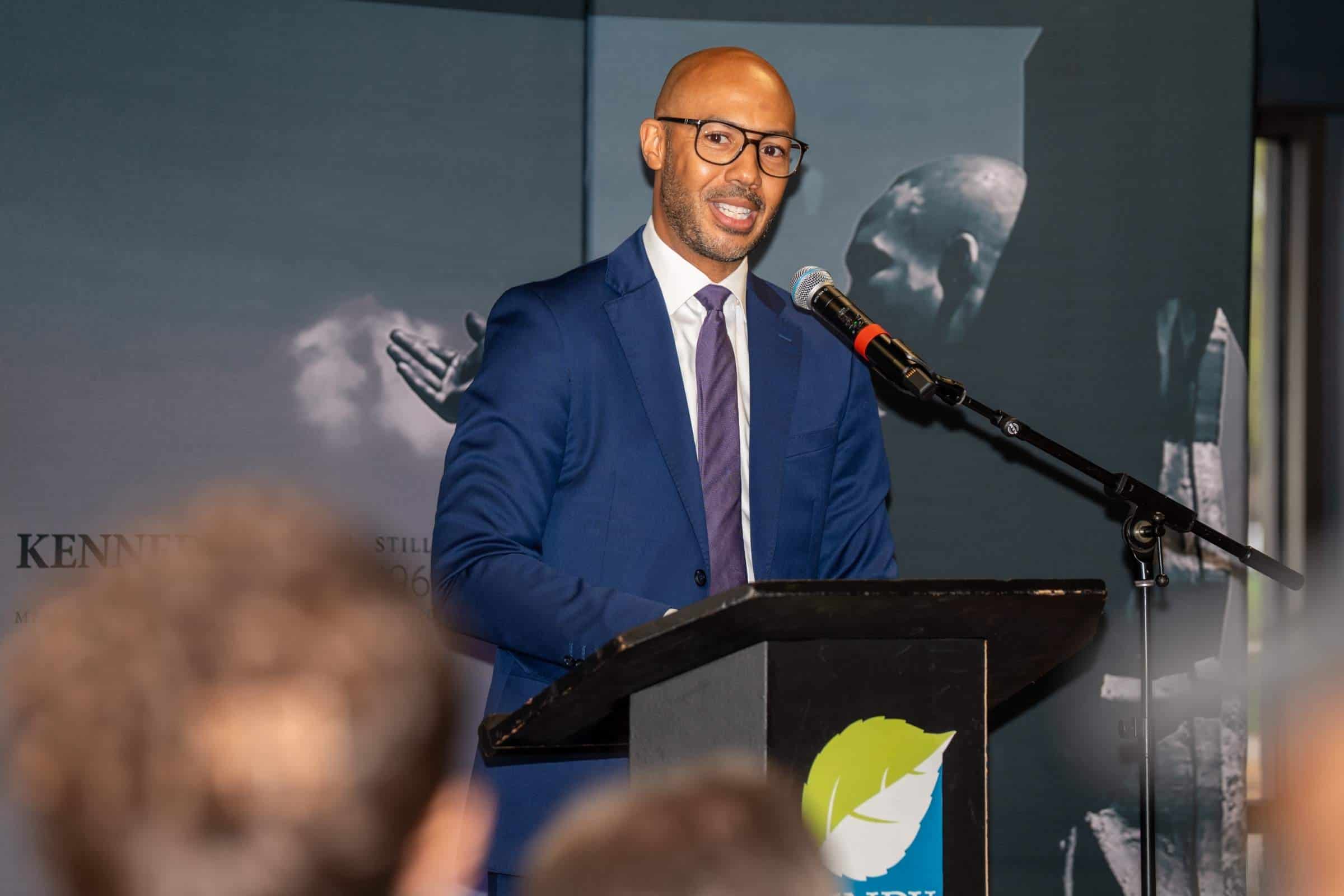
Ahmed Young, President and CEO of the Indianapolis Foundation, was the keynote speaker for the daylong program, which included a video of King’s “Mountaintop” speech, interdenominational prayers, an award presentation, and a video of the speech Sen. Robert F. Kennedy delivered in the wake of King’s assassination. The event also included remarks from Indiana State Rep. Greg Porter and Indianapolis Mayor Joe Hogsett.
During his speech, Young shared a passage from King’s Letter from a Birmingham Jail:
“In a real sense all life is interrelated … All men are caught in an inescapable network of mutuality, tied in a single garment of destiny. Whatever affects one directly, affects all indirectly.”
“These words,” Young said, “signified a universality and connectedness absent during King’s time and today.”
He connected that message to another pivotal moment, one that unfolded at that spot 58 years ago.
On April 4, 1968, Dr. King was in Memphis, standing alongside sanitation workers advocating for fair pay and equal rights, when he was assassinated. That same day, Senator Robert F. Kennedy was traveling through Indiana during his presidential campaign, with stops in South Bend and Muncie.
“As RFK was set to depart Muncie, he received word that Dr. King had been shot,” Young said. “And upon landing in Indy, he was told Dr. King died because of those wounds.”
Before addressing the crowd gathered at the Broadway Christian Center, Kennedy took a moment to sit in silence, Young noted.
“Kennedy sat quietly in his transport from the airport … jotting down a few notes,” Young said. “A moment of reflection before taking the stage. A moment to process before local history is made.”
That pause, Young said, mattered.
Choosing to reflect
“These moments of reflection are choices,” Young said. “These moments are opportunities to hear a sacred voice … a sacred voice that is far too often muted due to ear pods, social media, and other noises dominating our head space.”
When Kennedy stepped onto the stage, he was no longer delivering a campaign speech. He was delivering devastating news, according to Young.
“A collective gasp, moans, and tears swept across this gathering and the city,” he said.
But what followed helped shape the course of Indianapolis.
“Bobby’s words were informed by that moment of reflection,” Young told the audience. “His words were real and true because he knew pain. He felt the pain because of his own loss.”
In that moment, Kennedy spoke not as a candidate, but as a human being, calling for love, compassion, and justice. Indianapolis would go on to be one of the few major cities that did not erupt in violence that night, a legacy many attribute to the tone he set.
Carrying on the legacy
“Indianapolis is a unique city,” Young said. “One that I have grown to love. One that I now call home.”
Reflecting on his own journey — from teacher to attorney to leading the Indianapolis Foundation, Young shared how deeply he has come to value the community and its history.
As he looks ahead, that history continues to inform the Foundation’s work.
“As we consider investments in housing, health disparities, and strengthening pathways to building generational wealth,” he said, “we are firmly committed to investing in young people.”
That commitment, he explained, is about more than programs or funding.
Focus on Youth
“Ensuring our youth are connected to the right mentors, developing skills for the 21st century, picturing themselves leading this community into the next century.”
Young drew a direct line between the past and the responsibility we carry today.
“Bobby Kennedy was 42 years old when he was killed. Dr. King and Malcolm X were 39. James Chaney, Andrew Goodman, and Mickey Schwerner were in their early 20s,” he said. “These were young leaders taken from us too early.”
He also lifted up leaders like Diane Nash and Ella Baker, individuals who helped guide and mentor others, bridging generations and sustaining the movement forward.
“That’s what this gathering signifies,” he said. “A celebration of where we have been and a hope for what is to come.”
Even in moments of tragedy, there is a path forward.
“Robert Kennedy’s campaign lasted only 81 days,” Young said. “His legacy on these hallowed grounds far exceeded that brief campaign and stands as a beacon of hope in times of despair.”
That legacy, he said, calls us to something deeper.
“He inspires us to connect with our brothers and sisters, no matter race, religion or orientation,” he said. “The power of seeing the humanity in each other will get us through this malaise in which we are currently living.”
Young concluded his speech with a clear and enduring charge:
“Kennedy and King are forever linked. Let’s make sure our young people understand why this monument stands and what it stands for.”
As the evening came to a close, Young shared a poem by Mari Evans, offering one final reflection:
If there be sorrow
Let it be
For things undone…
Undreamed
Unrealized
Unattained
To these add one;
Love withheld…
…restrained
It served as a reminder not only to reflect, but to act in building a legacy rooted in connection, compassion, and possibility.