MLK Day Conversation with Bakari Sellers centers on the work ahead
The Madam Walker Legacy Center’s MLK Day of Celebration featured a powerful conversation with civil rights leader and author Bakari Sellers.
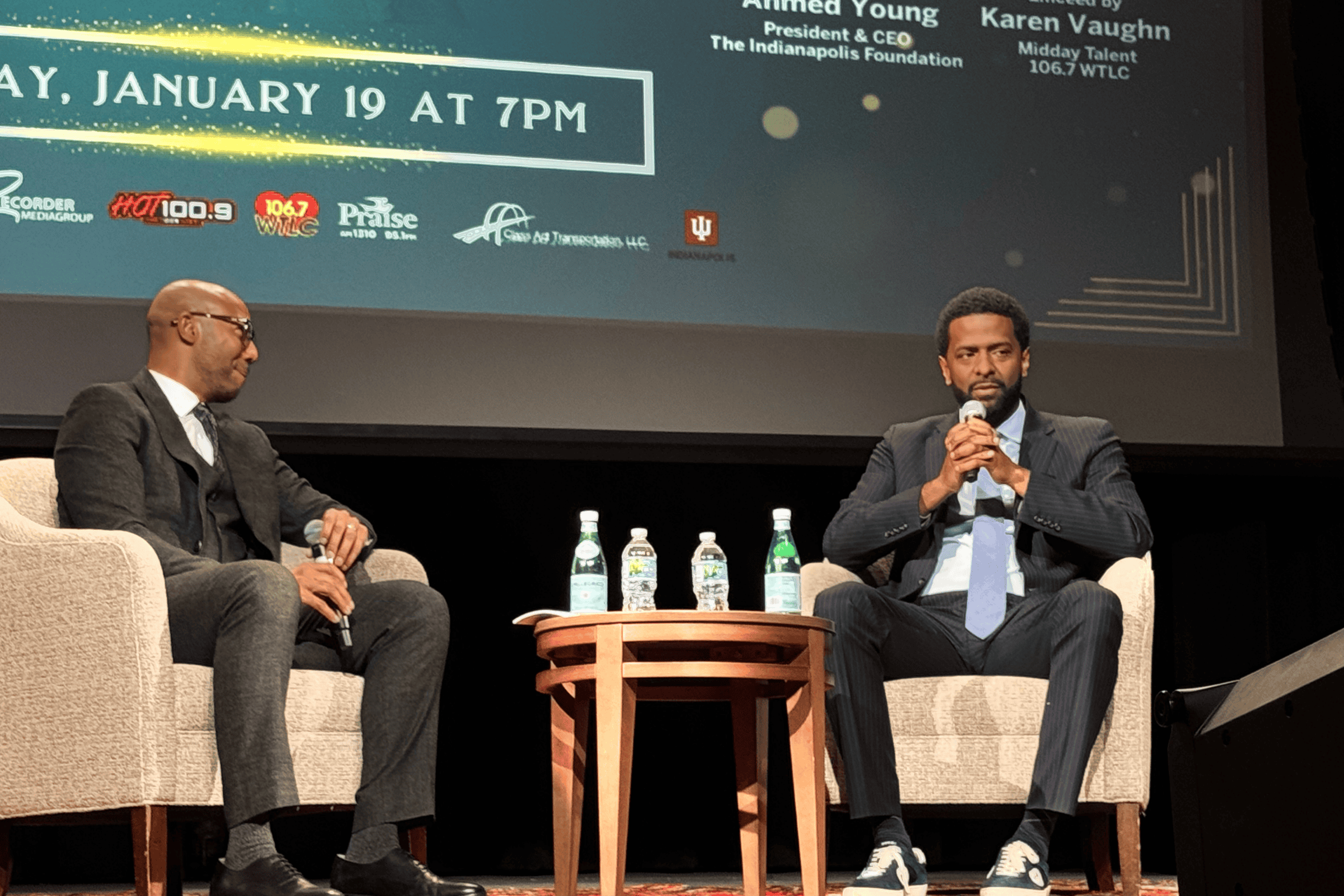
The Madam Walker Legacy Center’s 44th Annual MLK Day of Celebration brought a full house to the Walker Theatre for a wide-ranging conversation with Bakari Sellers, author, civil rights activist, entrepreneur, and former South Carolina legislator. Moderated by Indianapolis Foundation President and CEO Ahmed Young, the discussion explored leadership, education, generational change, and where hope lives in moments of uncertainty.
The evening also included opening remarks from U.S. Congressman André Carson, who encouraged the audience to follow Dr. King's legacy by choosing moral courage over political convenience in fighting injustice. Kristian Stricklen, President of the Madam Walker Legacy Center, also welcomed the audience and Karen Vaughn of 106.7 WTLC served as emcee.
Young opened the conversation with Sellers by thanking him for modeling a form of leadership rooted in humility and family, referencing Sellers’ book My Vanishing Country and its reflections on vulnerability and love. Sellers responded by emphasizing that leadership is ultimately measured by action and character. Authenticity, he said, requires people to show up fully and resist the urge to shrink themselves in professional or civic spaces.
The conversation moved into Sellers’ early life and education, including his time at Morehouse College, where he enrolled at the age of 16. While Morehouse shaped his understanding of leadership, Sellers noted that his values were grounded at home. His father, Cleveland Sellers, helped found the Student Nonviolent Coordinating Committee (SNCC), and his mother, Gwendolyn Sellers, was part of the desegregating class at her high school in Memphis. From those experiences, he developed a definition of leadership that rejects popularity in favor of cultivation.
“Leadership isn’t about how many followers you have,” Sellers said. “It’s about how many leaders you help create.”
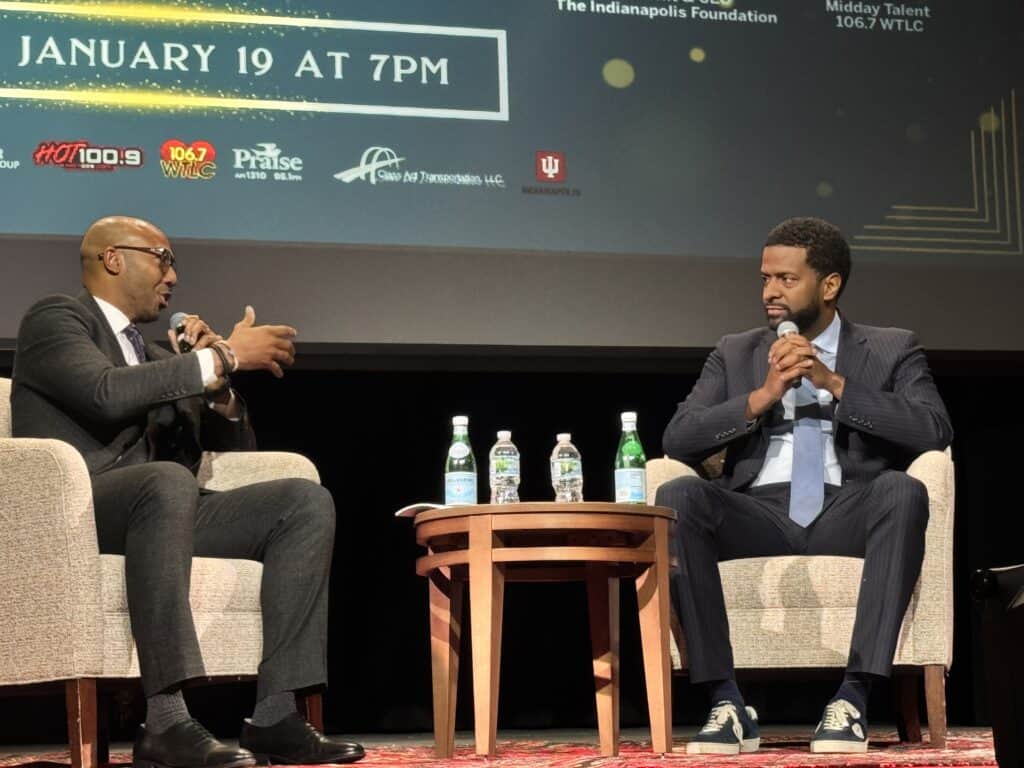
When asked about the role of higher education in a just society, Sellers warned against anti-intellectualism and a culture of low expectations. He argued that college campuses should be places where ideas are challenged and debated, not silenced, and that young people must remain engaged even when institutions fail to live up to their stated values.
Sellers also addressed the exhaustion many communities feel when progress seems to come only after deep loss. He pushed back on the idea that America’s systems are broken, asserting instead that many systems function exactly as designed … producing outcomes that exclude safety, opportunity, and dignity for too many people. From crumbling infrastructure and unequal access to clean water to families working long hours and still living on the edge, Sellers emphasized that dignity must remain central to any serious conversation about justice.
Hope, he said, does not come from waiting on a single national figure or political savior. It comes from everyday people willing to take responsibility for their communities. He reminded the audience that the Civil Rights Movement was built not only by well-known leaders, but by countless individuals whose names are rarely remembered.
Young turned the conversation toward generational leadership, with Sellers offering a candid challenge to older leaders: create real space for new voices. Supporting young people, he said, does not mean talking at them or trying to save them. It means listening, providing guardrails, and stepping aside when it’s time.
For the young people in the audience, Sellers’ advice was direct. The opportunities available today are vast, but the expectation remains the same: excellence. Whatever path they choose—creative, professional, or civic—they must commit to doing it well.
Sellers closed by reflecting on how he sustains himself amid the work. He focuses on winning each day, staying present, giving freely, and remaining grounded through faith, reflection, and service. Leadership, he suggested, is less about balance and more about intention—choosing, again and again, to leave people and places better than you found them.
The evening underscored the spirit of Dr. King’s legacy, not only honoring the past, but asking those in the room to carry forward the responsibility of shaping what comes next.